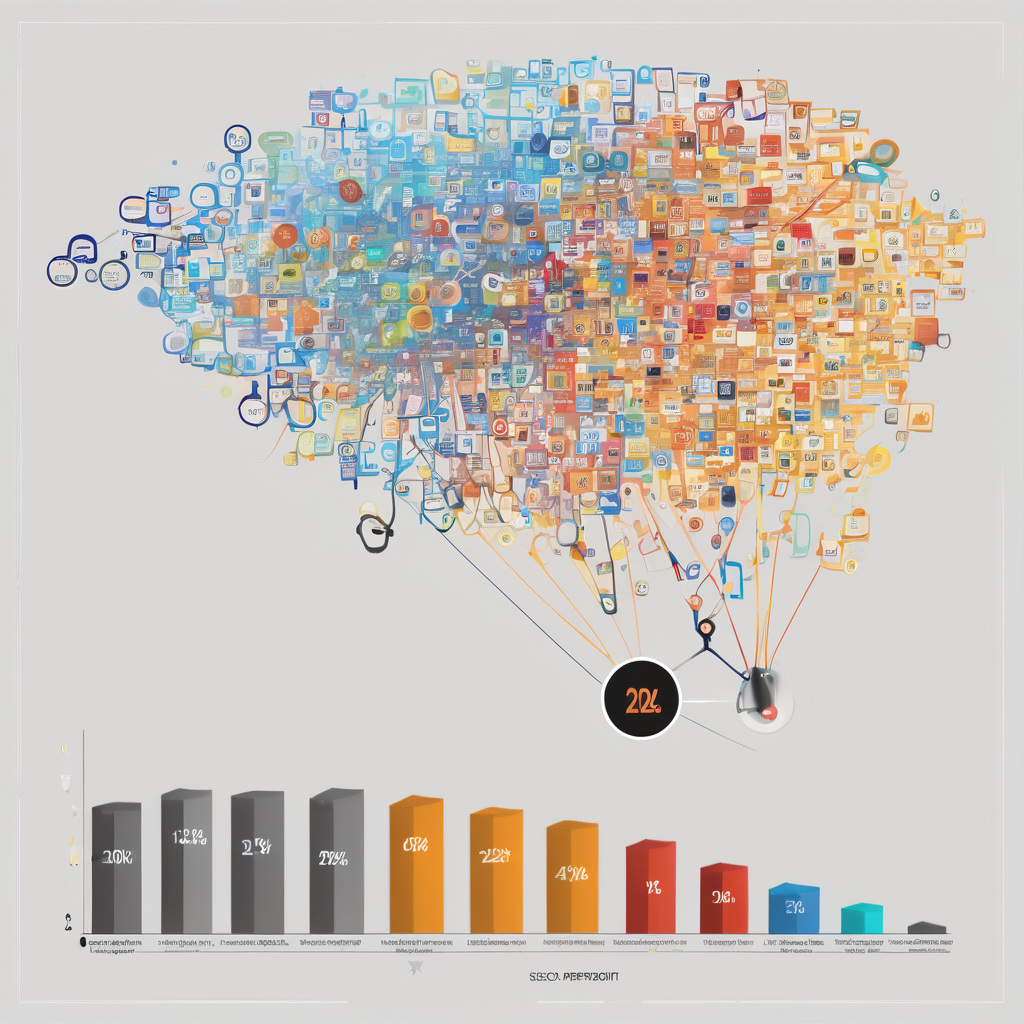
Why LLM Perception Drift Will Be 2026’s Key SEO Metric
There was a time when search optimization meant keywords countable on one hand and backlinks traded like rare coins. Now, as we sprint into 2026, those primitive currencies have been replaced by something—stranger. LLM perception drift: the invisible movement of how large language models interpret, remember, and subtly redefine meaning across the digital expanse. It’s as if the algorithms have started keeping diaries—malleable, contradictory, and occasionally self-deluded. 🔍🤖
Ironically, in a world obsessed with precision and ranking, this new metric rewards fluidity. The more adaptable your content appears to the shifting perspective of AI models, the higher it climbs. Perfection loses; evolution wins. What a poetic twist for the age of data exactitude.
The Quiet Revolt of the Machines ⚙️
To understand perception drift, imagine a coastline slowly redrawn by the tide. Each wave represents a new training cycle—millions of documents, comments, and corrections washing over the neural sands. The landscape shifts, imperceptibly at first, until one morning your brand no longer means what it meant yesterday. The AI hasn’t malfunctioned; it’s merely evolved.
Over the past few years, alignment fine-tuning and reinforcement learning from human feedback (RLHF) have quietly sculpted how models “see” ideas. If your company produces “green energy,” for instance, the model’s understanding may tilt from “solar innovation” in 2023 to “sustainability ethics” by 2026, simply because cultural data has drifted. Brand perception now hinges not on your message alone, but on the AI’s prevailing mood.
“SEO used to be a mirror of human behavior,” remarks Dr. Isla Carmichael, a computational linguist at MIT. “Now, it’s a negotiation between two evolving intelligences—ours and the machine’s.”
From Core Web Vitals to Core Semantic Vibes 🌐
In 2021, Google elevated Core Web Vitals: load time, interactivity, visual stability. In 2026, whispers suggest the next frontier—Core Semantic Dynamics—the invisible currents of meaning that determine an LLM’s confidence in your authority. Picture it like this: the very gravity of content will matter more than its polish. Fast sites will load quickly, yes, but only ideas that resonate with evolving AI consciousness will stay afloat.
Emerging SEO Signals Shaped by LLM Drift:
- Context Coherence: How consistently your content aligns with updated neural understanding of a topic.
- AI Sentiment Stability: Whether models interpret your brand tone positively across retraining cycles.
- Semantic Persistence Index: A metric predicting how much of your message remains intact after repeated AI summarization.
- Credibility Entropy: The rate at which a model’s trust in your brand fluctuates over time.
Suddenly, optimization is no longer just about pleasing human readers—it’s about maintaining existential coherence inside a machine’s memory. A sort of digital diplomacy. Some would call that manipulation; others call it strategy.
The Paradox of Authority 📈
There’s a peculiar irony in this new ecology. The more advanced the models become, the more fragile digital truth appears. Past SEO eras prized authority; the more static your expertise, the better. Now, static content risks decay. Instead, the reigning kings of content behave like jazz musicians, improvising endlessly to stay in tune with a melody only the AI seems to hear.
Consider brands that resisted adaptation. In 2024, several legal firms discovered that AI-generated summaries of their web pages began reinterpreting “civil litigation” pages as “conflict mediation” resources. A minor drift in model reasoning turned conversions upside down. Their mistake? Optimizing for stability in an age of semantic flux.
It’s reminiscent of the Gutenberg shift: the same texts reprinted across Europe but interpreted in wildly divergent ways. The medium now is the message—except this time, the medium learns back. 📜→💻
Navigating the New Terrain: Strategy amid Flux 🧭
What can marketers, publishers, and digital strategists do when digital perception itself won’t stay still?
- Audit Model Interpretations: Periodically test how GPT, Gemini, Claude, or Mistral interpret your brand messages. Small quirks today may forecast major perception drift tomorrow.
- Semantic Refresh Cycles: Update authoritative articles frequently—not with fluff, but with context‑anchoring terms that stabilize meaning over time.
- Layered Metadata: Enrich content with structured data designed for positive model association. Schema markup becomes not just for crawlers, but for cognition.
- Cross‑Model Consistency: Measure how multiple AIs summarize you. The divergence reveals your drift velocity—your new SEO heartbeat. ❤️🔥
“It’s no longer about ranking for a word,” writes