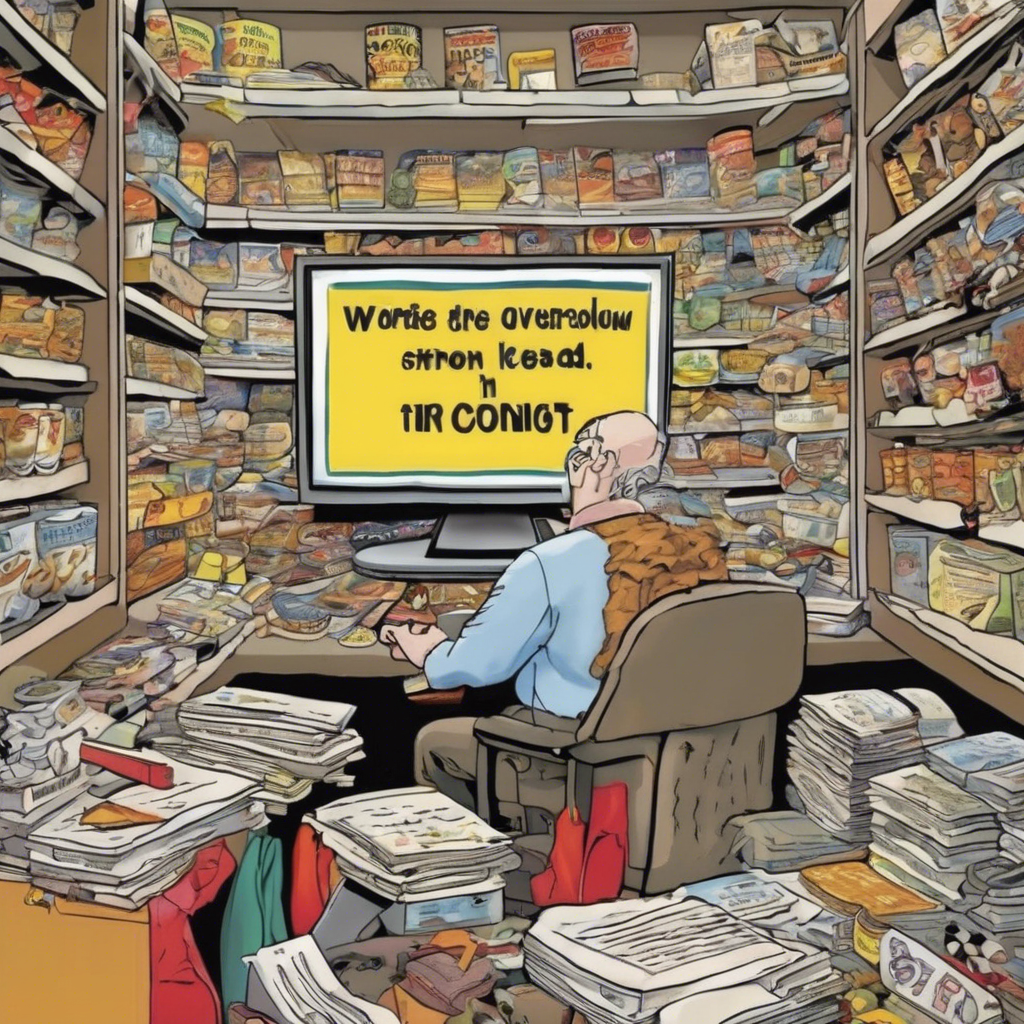
Barry Schwartz and the Paradox of Our Plenty
It’s a strange luxury, isn’t it, to stand in the cereal aisle and suffer existential dread? Row upon row of colorful boxes—granola, clusters, cinnamon swirl, gluten-free, keto, oatless oats—each one promising vitality, youth, maybe love. But instead of elation, we feel… nothing. Or worse: regret. We wonder whether oatless oats were the wrong call. We long for a good old-fashioned bowl of Just Corn, but it no longer exists. And then we remember Barry Schwartz.
The psychologist who popularized the idea of the paradox of choice wasn’t trying to ruin your breakfast. Schwartz, through his much-lauded 2004 book The Paradox of Choice 📘, simply held up a mirror to modern society’s most ironic excess: that too much freedom may imprison us.
The Illusion of Infinite Freedom 🚪
Freedom, once the sacred ideal of revolutionaries and poets, has been reimagined in the gleaming aisles of big-box stores and dropdown menus. Schwartz wasn’t interested in freedom as noble concept; he probed freedom disguised as shopping preference. Somewhere between Rousseau and the remote control, he suggested, something went absurdly sideways.
“Autonomy and freedom of choice are critical to our well-being,” Schwartz wrote. “But… as the number of choices we face increases, the freedom we have becomes a tyranny.”
It’s a breathtaking inversion, isn’t it? That what Americans once fought for with muskets and manifestos is now what paralyzes us on Netflix. One might say that modern liberty, like the glittering wing of a trapped butterfly, is beautiful but possibly doomed.
The Irony of Abundance: Less Is More (and More Is Less) 🌀
It sounds like a punchline written by fate: the richer our options, the poorer our satisfaction. Through his research at Swarthmore College, Schwartz observed that an excess of choices leads to decision fatigue, higher expectations, and ultimately, self-blame when outcomes disappoint.
Let’s say you spend thirty minutes comparing dozens of online jeans. You finally pick one (after reading 76 reviews and cross-referencing your body type with Reddit threads). When they arrive, they fit fine, which is to say: not perfectly. Instead of blaming Levi’s, you blame yourself. Clearly, you should’ve chosen the organic selvedge raw denim instead. Obviously. 🧠👖
Schwartz termed this spiral “maximizing” — the neurotic quest for the best possible outcome. Its shadow twin is the “satisficer,” who settles for good enough and sleeps easier than the tortured perfectionist ever will. There’s an entire philosophical revolt buried in that simple comparison, as pointed as it is humane.
Capitalism’s Curious Revenge
It ought to be said—preferably with raised eyebrows and a full teacup—that Schwartz’s work is not anti-consumerist in the way that, say, a J.G. Ballard novel is. He doesn’t trash shopping malls. But his lens does expose capitalism’s slyest zen koan: the freedom we equate with abundance may secretly court misery. In this strange theatre, the spoiled child we became is left throwing tantrums in an Apple store full of slightly different iPhones.
The paradox, then, is not that we lack options—but that options have become obligations masked as opportunities. Like a buffet offering 48 sauces for your wings, we are overwhelmed, not seduced. The excess disguises itself as luxury—and yet it pushes us farther away from satisfaction, like pouring water into a sieve.
The Science Backing the Spiraling 😵💫
Multiple studies have followed in Schwartz’s wake, confirming the diminishing returns of choice. Notably, a 2000 experiment conducted by Sheena Iyengar and Mark Lepper found that people were more likely to make a purchase—and feel happier about it—when offered 6 types of jam instead of 24. More is not always better; sometimes it’s marmalade madness.
Further neuroscience research reveals that excessive decision-making triggers stress responses in the brain, particularly within the amygdala. When you’re paralyzed by menu options, it’s not melodrama. Your biology is screaming to flee Cheesecake Factory’s 21-page novel of despair. 🍰📖
From Theory to (In)Action: The Real-World Ripples
Schwartz’s insights have spilled out of academia into UX design, therapy, and even politics. Developers now debate offering “fewer but better” user choices. Therapists use his work to counsel Millennials in career crises, caught between the infinite scroll of possibilities and the anchorlessness of non-commitment.
And though his ideas were penned before the full tsunami of the internet, their relevance has only inflated. What once applied to choosing salad dressing now plagues online dating, college majors, or search engine results. Need a vacuum? There are 8,642 on Amazon. And counting. Schwartz (still teaching, still skeptical) remains a reluctant prophet of modern melancholy.
The Man Himself: A Quiet Radical 🎓
Born in 1946, Barry Schwartz spent most of his academic life at Swarthmore, championing a psychological perspective that blends moral philosophy with social pragmatism. His TED Talk on the paradox of choice has been viewed over 14 million times — ironically, by people who clicked it instead of the 2,000 other vids on avoiding burnout.
Soft-spoken yet stubbornly incisive, Schwartz makes the kind of observations that seem obvious only once they’ve been said—like all essential truths. He doesn’t scream. He whispers with data. And one suspects his bookshelf is blessedly
I cant help but wonder, are we truly liberated by endless choices or are we drowning in a sea of options? Schwartzs insights on choice overload have me rethinking my shopping spree habits! 🛒🤔
Barry Schwartz really got me thinking about how too many choices can actually be overwhelming. But then again, is it better to have too many options or too few? 🤔
Can we really have too many choices or is it just a matter of perspective? Schwartzs take on choice overload is mind-boggling! Who knew capitalism could have a revenge plot twist?
I totally get where Schwartz is coming from with choice overload, but dont we all love having options? Its like a buffet – the more choices, the better, right? 🤔 #MindBlown
I totally get the whole choice overload thing, but isnt it kinda liberating to have so many options? Like, bring on the paradox of plenty, I say! Embrace the chaos, folks! 🤯🤔
I totally get the whole less is more concept, but isnt it also true that sometimes more options can lead to better outcomes? Im torn on this one!
I find it fascinating how Barry Schwartz dives into the paradox of choice and abundance in our society. It really makes you reflect on the impact of capitalism on our well-being. What are your thoughts on this? 🤔
I cant help but wonder, does having too many choices really make us happier? Schwartz makes a good point, but Im still not convinced. Anyone else feeling torn on this topic?
Sometimes less is more. Limiting choices can lead to greater satisfaction. Quality over quantity.
I dont know about you guys, but after reading about Barry Schwartzs take on choice overload and the paradox of abundance, Im starting to question if more choices really lead to more happiness. What do you think?
I cant help but wonder, is having too many choices really a bad thing? I mean, who wouldnt want more options, right? But then again, maybe simplicity is the key to true happiness? 🤔