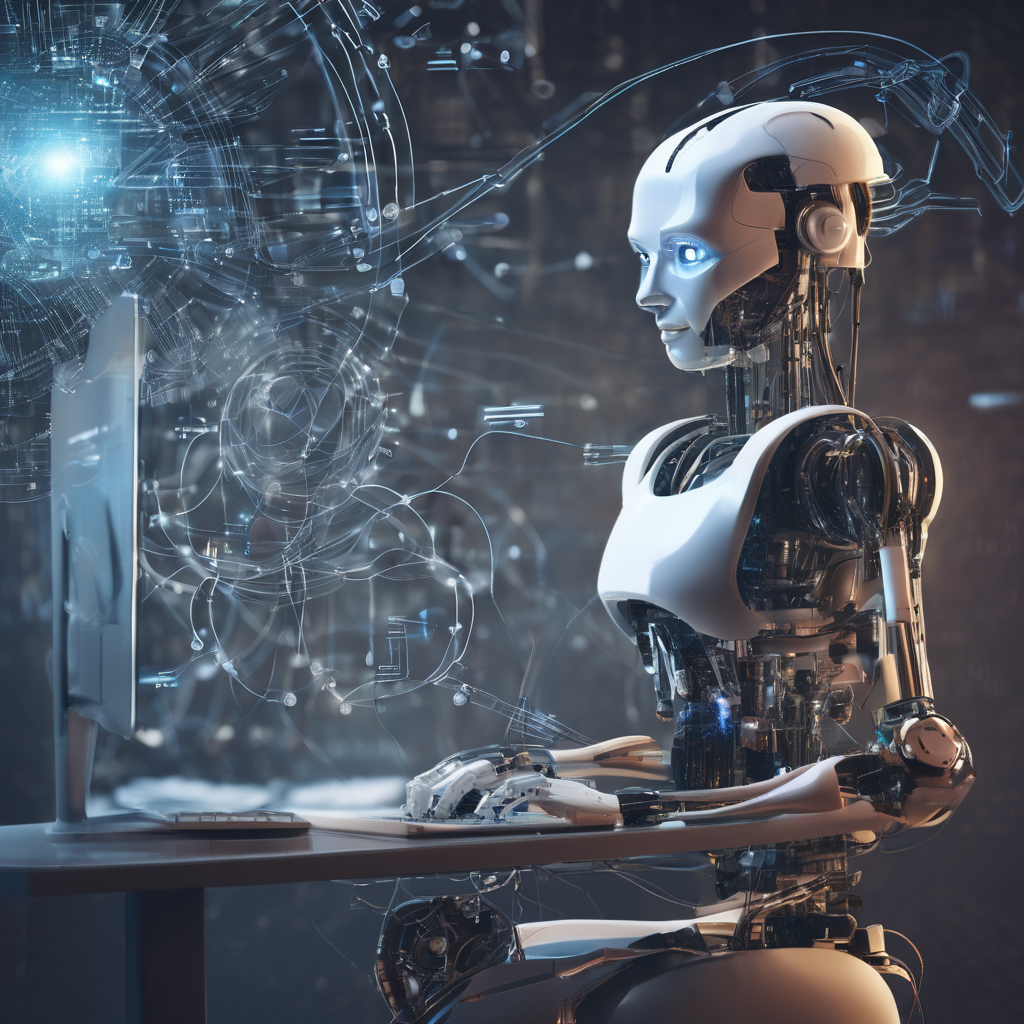
How to Tell if Google’s AI Max for Search Is Actually Working
Once upon a time, we typed a question into a white box, and—like magic—Google answered. Back then, “search” meant scavenging. Today, with AI Max for Search, the scavenger’s torch has been replaced by a spotlight wielded by an algorithm whispering, “Don’t worry, I already know what you meant.” But does it really? Or have we traded the uncertainty of human curiosity for the illusion of perfect understanding? 🔍🤖
AI Max, as unveiled by Google in 2024, is no mere incremental update. It’s a full-bodied attempt to integrate generative AI into the bloodstream of search—expanding on the Search Generative Experience (SGE) that began as an experiment and is now quietly shaping billions of queries. In theory, it interprets nuance, synthesizes sources, and offers answers as if composed by an erudite friend who reads everything before breakfast. In practice, well… let’s say some of us are meeting very strange “friends.”
Reading the Signs: When AI Max Is Doing Its Job 🧠
The irony of AI Max is that its success is most invisible when it’s most profound. If you no longer have to click twenty links to find a relevant answer, congratulations—it’s working. If you finish a session without realizing you never left Google’s result page, it’s really working. And if the answer feels uncannily personal, as though the machine remembered you once searched for “best running shoes” in 2016, that, too, is part of the plan.
Google claims that AI Max draws from a tighter synthesis of user intent models and knowledge graph interlinking. In simple terms, it’s learning context—not just keywords. It doesn’t merely react to queries but anticipates their implied questions, much like a chess player who studies not the move, but the mood behind it.
Ways you might notice AI Max in action:
- Search summaries that blend multiple perspectives, often appearing above traditional results.
- Contextual refinements: follow-up suggestions that feel conversational rather than algorithmic.
- Dynamic citations: AI-generated answers linking back to verified sources (though not always your favorites).
- Speed and cohesion—answers that appear cohesive even for ambiguous or contradictory queries.
“The best AI is the one you don’t notice—until something goes wrong,” quips a former Google engineer who asked not to be named. “Users don’t want AI; they want results. AI Max is just the new shovel for the same gold rush.”
When It’s Not Working (Or Working Too Well) ⚙️
Of course, not all that glitters in the AI mine is gold. Sometimes, AI Max produces “synthetic certainty”—confident answers woven from incomplete data. Like a talented liar at a dinner party, it’s persuasive, composed, and occasionally dead wrong. There’s subtle irony here: Google built AI Max to fight misinformation, yet its language models sometimes fabricate facts more eloquently than humans ever could.
Critics point to an antithesis at the heart of the update: the more human-like AI becomes, the less human the search experience feels. People used to enjoy the hunt—the trail of hyperlinks, the quiet delight of reading five articles on the same topic until one finally resonated. Now, answers drop instantly, smooth as glass and twice as opaque. Knowledge has become a service, not a journey. 🧩
One might compare it to rain: when it’s gentle, nourishing, and rhythmic, AI Max refreshes the web. But when it downpours indiscriminately—summarizing niche blogs, distilling art reviews, or flattening complex debates—it washes away the fragile topsoil of original thought.
The Metrics Beneath the Mystery 📊
So, how can we measure if AI Max is delivering on its promise? Google, as ever, guards internal metrics like a sphinx behind glass. But external analysts suggest a few indicators: improvements in semantic accuracy, user dwell time, and reduced pogo-sticking (that is, when you bounce back to search results after clicking a link). According to SEO platform SimilarWeb, sites featured in AI-generated summaries saw traffic dips between 8% and 18% after rollout—evidence, paradoxically, that the algorithm might be *too effective* at keeping users within its walls.
Still, there are quieter gains. Accessibility advocates note that summarization tools powered by AI Max improve comprehension for non-native speakers and visually impaired users. In multilingual queries, results have become contextually richer, less reliant on literal translation. Perhaps progress sometimes speaks softly while disruption shouts. 🌍
The Human Factor in a Machine’s World
I remember once searching late at night for a fragment of poetry—I couldn’t recall the lines, only the feeling. The old Google gave me breadcrumbs; I followed forums, annotations, fragments of digital memory. Now, AI Max gives me a polished paraphrase, a synthetic poem that almost breathes but not quite. It’s faster, smarter, and emotionally tone-deaf. An efficient answer to an ineffable question.
That’s the paradox of progress: as search learns