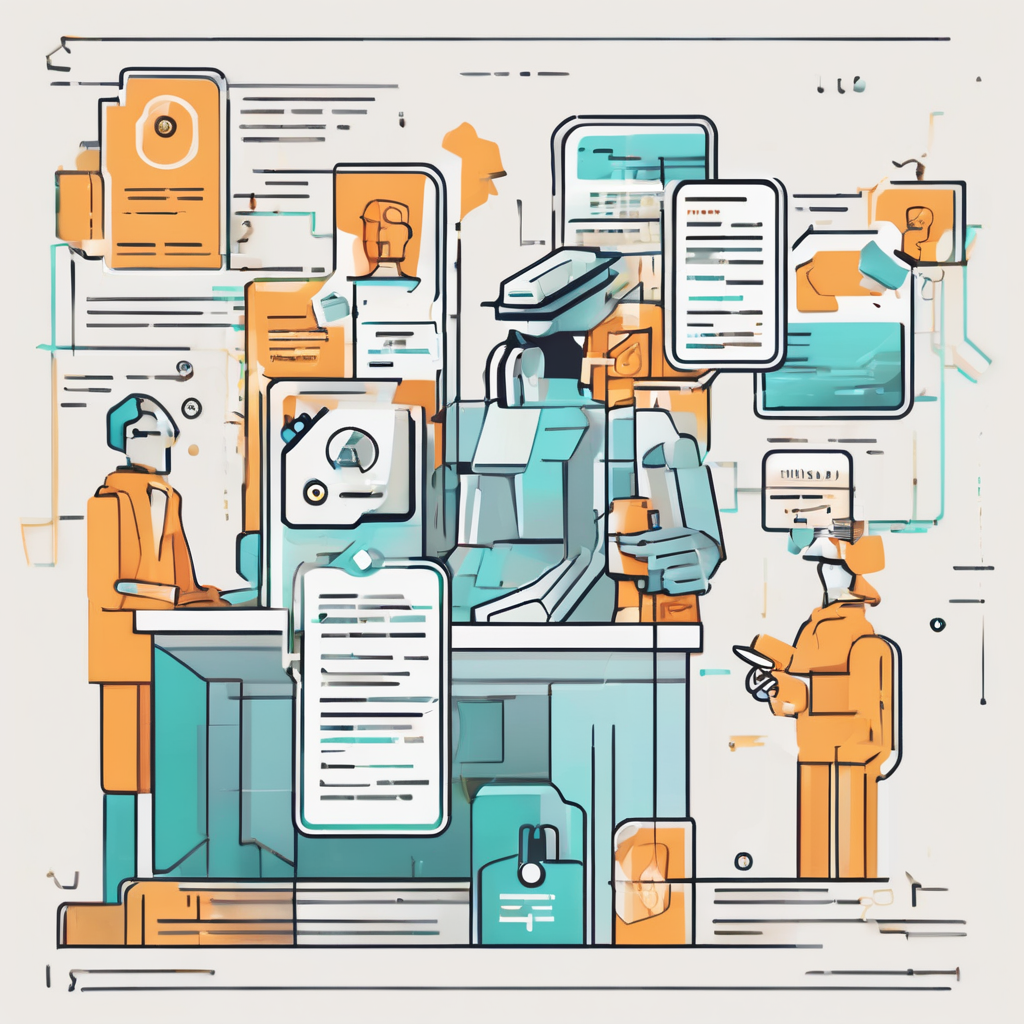
AI Search & the Shift Towards Inauthenticity & Commercial Interests
Once upon a digital dawn, search engines were librarians—quiet, neutral, and curious about your questions. Now, they feel more like salespeople wearing lab coats. 🤖 We have entered an age where algorithms don’t simply answer; they anticipate, persuade, and—often—profit.
When artificial intelligence took over search, it promised to refine information, eliminate noise, and “personalize” results. But personalization, as it turns out, can be a velvet glove for commercial manipulation. Like perfume masking a chemical odor, AI search today offers the scent of authenticity while blending the essence of marketing underneath.
The Irony of Intelligence 🧠
The irony could not be sharper: machines designed to enhance truth often blur it. Generative AI systems now summarize everything—from medical research to political debates—into saccharine, concise narratives. They promise “neutral” information, yet their outputs depend on the very fabric of monetized data: SEO-optimized pages, affiliate content, and sponsored narratives hidden behind the veil of objectivity.
Google’s own “Search Generative Experience” and Microsoft’s Copilot integration turned what used to be an index into an editorial. The algorithms decide what counts as insight. Meanwhile, independent sources struggle to swim upstream, like wild fish in a river gradually thickened by corporate runoff.
“Authenticity has become an algorithmic variable rather than a moral one,” observes Dr. Isabella Tran, a digital ethics researcher at Stanford University.
From Curiosity to Commerce: A Tale of Two Internets 💸
Twenty years ago, typing a query into a search bar felt like opening a window to collective intelligence. Today, it feels more like walking into a brightly lit mall designed by data analysts. The transition is subtle—so subtle it almost masquerades as progress. Ads blend with answers; opinions become “expert summaries”; corporate blogs pose as human experience.
The antithesis is staggering. Once, human curiosity was the driving force of search. Now, predictive analytics anticipate our desires before we’ve even articulated them, monetizing not our questions but our attention itself. Users no longer search for knowledge—they are searched by it.
Data to Consider:
- According to Similarweb (2024), sponsored search results account for roughly 35–40% of top-page visibility on major search engines.
- An Oxford Internet Institute study showed that generative summaries reduce user clicks to original sources by up to 65%, diminishing visibility for independent sites.
- Nearly 70% of web traffic is now directed through algorithms tuned for monetization rather than relevance or diversity of viewpoint.
The Paradox of Trust in an Age of Automation
We trust algorithms because they appear inhuman, and therefore impartial. Yet the code is written by humans with very human incentives. OpenAI, Google, Meta—they all insist their AI search tools are “helpful,” a word that sounds benign but hides a measurable commercial intent. Helpful to whom, exactly?
Consider a metaphor: AI search is like a mirror that gradually turns into a shop window. At first, it reflects our questions faithfully. But slowly, it begins displaying items for sale beside our reflections. We still see ourselves—but through glass designed to sell us something. 🪞🛍️
In 2023–24, the global AI search market skyrocketed beyond $10 billion, driven largely by advertising partnerships and “synthetic search” summaries. Some call this progress; others, quiet digital colonization. The world’s knowledge, once decentralized, is being filtered, summarized, and subtly adjusted to fit economic hierarchies of data ownership.
Echoes of the Human: A Brief Digression 💬
I remember an afternoon not long ago when my grandmother asked aloud, “Why did the sky look purple before rain when I was young?” I tried searching it—only to receive an AI paragraph explaining optical scattering and affiliate links to telescopes. In that moment, the absurdity struck me: something that was once pure wonder became a consumer opportunity. The rain started, and I laughed. The irony, again, was poetic.
Invisible Hands: The Economics of Inauthenticity
Search engines used to rank content based on relevance and authority. Now, those principles are smudged with a commercial fingerprint. Clever publishers teach AI what to “prefer”: frequent keywords, simplified syntax, and emotionally neutral tones designed to please the algorithmic palate.
The result? A web that feels eerily homogenous, like a city where every café serves the same blend. ☕ Behind each AI-generated answer is a marketplace where data is traded like currency, user trust becomes leverage, and truth becomes whatever performs best in engagement metrics.
Resistance and Restoration
Yet, amid this shimmering fog of curated inauthenticity, there are sparks of rebellion. Independent technologists are developing open-source AI search alternatives: tools like Perplexity AI, Kagi, and Metaphor Systems attempt to restore transparency and citation-first logic. Others advocate for regulations addressing algorithmic bias and AI disclosure in search summaries.
There’s a small but growing awareness