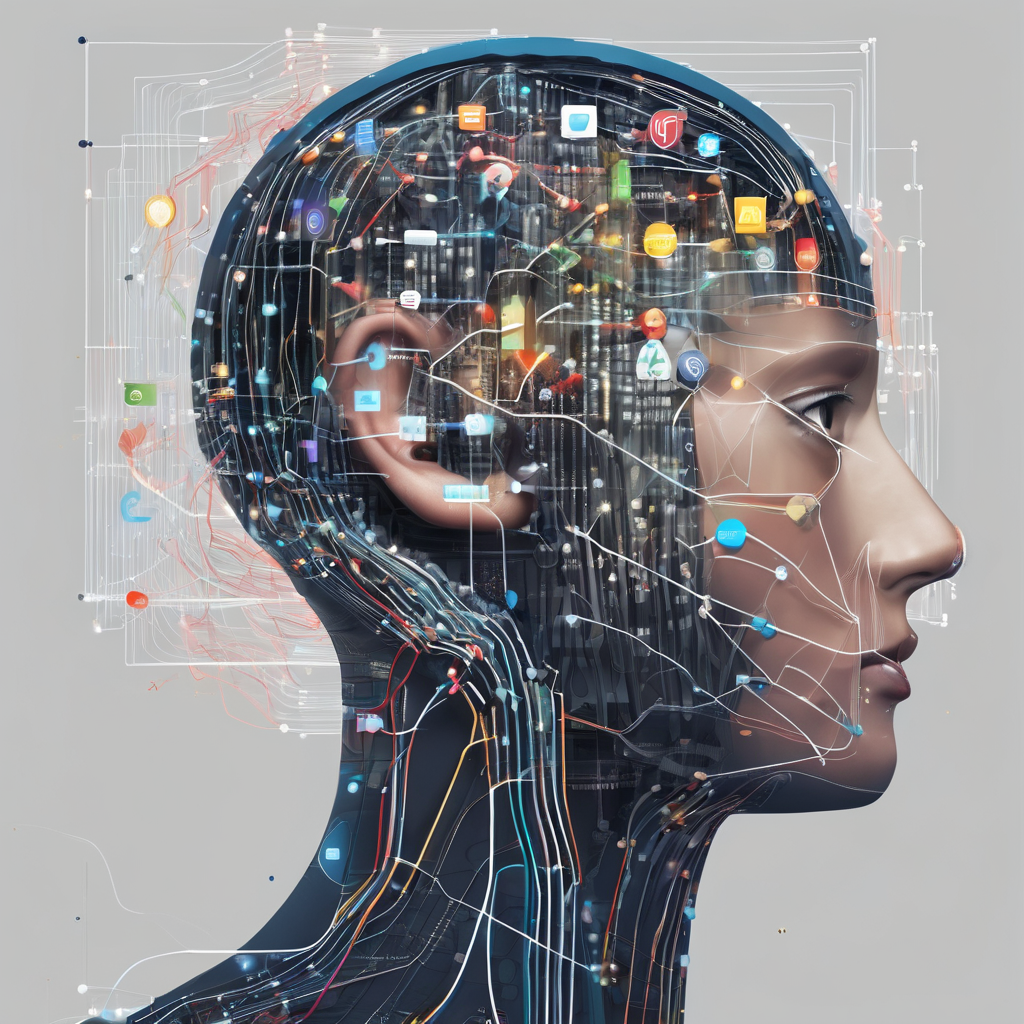
Tim Berners-Lee Warns: AI May Collapse the Ad-Funded Web 🌍🤖
When Sir Tim Berners-Lee—the man who invented the World Wide Web—chooses to speak about its fragility, one ought to listen. After all, he built the very scaffolding of our digital civilization. Yet his latest warning sounds less like nostalgia and more like prophecy: artificial intelligence, he fears, might bring down the ad-funded web. The irony is sharp—algorithms born from the same data economy that thrived on ads could now consume the hand that fed them. 🧩
Berners-Lee once dreamt of a shared digital garden, a space for knowledge, creativity, and community. What blossomed, however, were pop-up ads, clickbait blooms, and SEO weeds thriving under the artificial sun of engagement metrics. And now, the new gardener, AI—efficient, tireless, and ever-hungry—may sweep the soil clean, leaving publishers staring at an uncanny void where revenue streams used to flow.
The Paradox of Progress: When Smarter Machines Starve Their Makers ⚙️
The modern web’s economy—worth an estimated $600 billion in global digital ads, according to eMarketer—is sustained by attention. Human eyes, historically, were scarce enough to sustain the system. But in the last two years, large language models and AI agents have begun autonomously generating, summarizing, and consuming information. The result? A self-referential feedback loop where algorithms read the web so humans don’t have to.
“If AI systems simply scrape the web and reproduce it, who pays for the creation of that content?” Berners-Lee asked in a recent panel at the World Economic Forum. It sounded less like a question and more like a confession.
In economic terms, the threat is existential. Platforms like Google and Meta already channel roughly half of all online ad spending, leaving smaller publishers gasping for air. Now AI search and chat systems—ChatGPT, Gemini, Copilot—generate responses directly, obviating clicks altogether. Traffic plummets. Ad impressions vanish. The “open web,” once sprawling like a living forest, begins to resemble a petrified grove—majestic but lifeless. 🌲
A Brief Intermission: The Café and the Code ☕💻
Last week, I overheard a conversation in a café between two developers debating whether to use AI to write blog copy. One said it was “like soldering the internet into a vending machine—press a button, get content.” The other replied, “Yes, but who coins the tokens?” I didn’t intervene, though I wanted to. That casual back-and-forth captured precisely what Berners-Lee was hinting at: a business model consuming itself, quietly, elegantly, like sugar dissolving in the very coffee it sweetens.
Antithesis at the Heart of the Web
The early web was communal, academic, and idealistic—its architects traded protocols, not profits. Today’s web is transactional, addictive, and algorithmic. The contrast could not be starker: one envisioned connectivity as a public good; the other weaponized it as a private asset. That antithesis defines our era. It’s as though a library became a slot machine. 📚🎰
Artificial intelligence intensifies this schism. On one hand, AI can democratize knowledge, automate drudgery, and bridge linguistic barriers. On the other, it deepens dependence on opaque corporate architectures—massive compute farms inhaling energy and data at planetary scale. The creators of open web technologies now watch their child—AI—devour the parent system that birthed it. There is symmetry here, but of a tragic kind.
Numbers, Narratives, and the Hollowed Economy 💸
Research firm GroupM estimates that by 2025, AI-generated content may constitute over 25% of web material. Combine that with the rise of synthetic search interfaces, and the ad model begins to crumble. No clicks, no impressions, no revenue. The whole digital advertising complex—built meticulously over three decades—buckles like ice under too much weight.
It’s an irony both elegant and cruel: the more efficient AI becomes at producing content, the less incentive there is for humans to create it. A paradox of productivity. Publishers find themselves in the strange position of competing with machines trained on their own data. A baker devoured by her own recipe.
What Berners-Lee Proposes: Reclaiming the Web’s Soul 🌐
His solution isn’t a nostalgic return to the past, but a reconstruction. Through his company Inrupt and the Solid project, Berners-Lee advocates for “data pods,” private stores of personal information users control directly. In this schema, data becomes an extension of individual agency—not a corporate asset. Such a vision would disarm both surveillance capitalism and parasitic AI training models.
“We need an AI that works for us, not through us,” he argues. That statement lands like a moral imperative. It suggests a digital ecosystem that values integrity over impressions, and context over clicks. Could such a web sustain itself economically? Perhaps through micropayments, subscriptions, or classically human values like trust. Each option feels fragile, but not impossible.