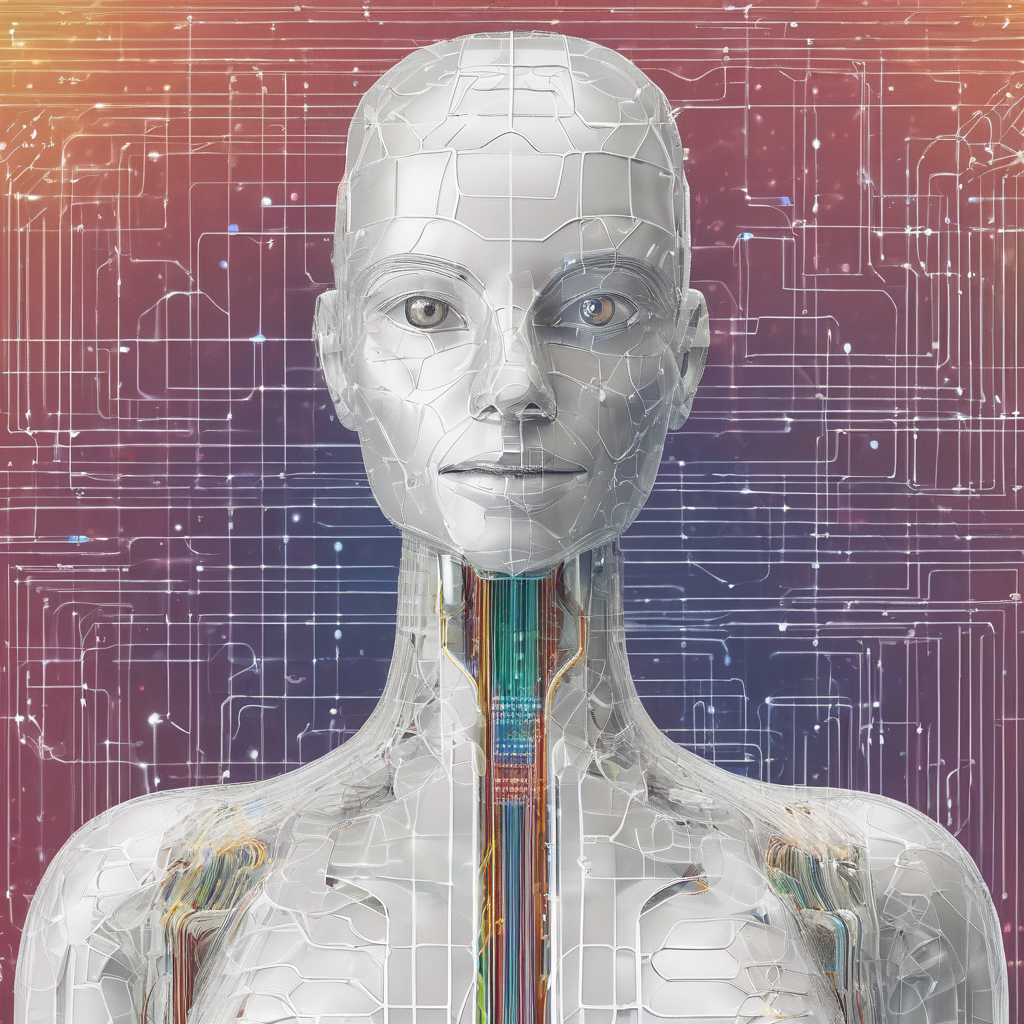
Google Updates Links in AI Mode and Expands Web Guide Test in All Tab 🌐
How does one of the world’s most powerful companies teach an algorithm to be polite? With the latest updates to Google’s AI Mode and the broad rollout of its Web Guide test in the “All” tab, the question feels less rhetorical than ever. In this subtle reshaping of the search experience, Google seems to be reintroducing the very thing it disrupted — the humble hyperlink — except now, it breathes through silicon lungs. ⚙️
Underneath its sleek interface, the web’s oldest social contract — that creators link to each other — is being rewritten in code. Ironically, AI Mode, which once offered short synthesized answers with minimal attribution, is now riddled with links again, like a student rediscovering the value of citing sources after flirting with plagiarism. The digital pendulum swings back, gleaming and slightly self-conscious.
The Reinvention of the Link 🔗
Links are not mere portals; they are currency in the search economy. Early reports from testing show that in AI Overviews — the section that generates summaries using generative AI — Google has updated link placement to emphasize the origin websites. Each key statement, once floating in contextless air, now sits beside a visible citation. Transparency, meet your algorithmic mirror.
According to data from Search Engine Land and 9to5Google, the redesigned module includes inline citations and a refined “Web Guide” panel that lists recommended sites grouped by category (tutorials, product guides, official resources). These are no longer buried behind the machine’s summary but appear as companions — cautiously included, almost apologetically — as if the AI were clearing its throat after interrupting the authors of the internet.
“This isn’t just about showing links,” explains a UX researcher who worked on the update. “It’s about signaling that AI-generated information still has roots in human work — and those roots deserve to be visible.”
That phrasing hides a paradox: Google’s AI needs the open web to survive, yet its efficiency could quietly cannibalize it. Like a tree feeding on its own fallen leaves, it thrives on what it consumes.
When the Web Guides the Machine 🧭
The Web Guide feature, which began as a limited test in the U.S. mid-2024, is now appearing more broadly in users’ “All” search tabs. It groups sites by theme, eliminating the scroll fatigue of digging through ten blue links. For example, a search for “how to fix a leaky faucet” might display curated sections like “Home Improvement Forums,” “Manufacturer Manuals,” and “Video Tutorials.” Practical, yes — though one can’t help but note the irony of outsourcing curation to the same entity that once championed algorithmic neutrality.
Key aspects of the Web Guide update include:
- Enhanced categorization of web results by content type and authority
- Integration into the default “All” tab, not limited to generative search experiences
- Dynamic updating based on user behavior and feedback loops
- Expansion to test markets beyond the U.S., reflecting global data model adjustments
The intent, at least superficially, is noble: to help users rediscover the web instead of settling for AI synopses. Yet, like a librarian who begins writing their own books, Google risks blurring the line between organizing and authoring information. In today’s search landscape, neutrality is no longer the default setting — it’s a conscious act of restraint.
The Algorithm’s New Mask 🤖
Behind these interface changes is a subtle recalibration of trust. AI-generated content feels smooth, persuasive, and increasingly indistinguishable from traditional snippets. But trust built on convenience can be fragile. When we click an AI-produced answer instead of a person’s website, we accept a small trade: speed for texture, certainty for interpretation. It’s a fair trade — until it isn’t.
Google’s engineers, perhaps aware of this imbalance, have begun injecting richer attribution models and contextual signals into AI Mode. Internal testing reportedly showed improved user engagement when AI panels prominently referenced source links. The irony? Users seem to trust the machine more when it looks a little more human — when it cites, hedges, and hesitates.
In its own quiet way, the new AI Mode mirrors a human cognitive quirk: the need to sound modest to be believed. Artificial intelligence, in other words, is learning the manners of intellectual humility — one hyperlink at a time.
Information as Ecology 🌱 vs. Efficiency as Economy ⚡
There’s a striking antithesis at the heart of Google’s transformation. On one side, the company portrays itself as a steward of the open web, championing creators and helping users “discover diverse perspectives.” On the other, it builds a generative model that threatens to reduce websites to mere raw material — a compost heap for machine learning.
The relationship between AI Modes and Web Guides mirrors that