How Google Query Expansion Can Help Your Content Be Seen 🔎
There was a time, not so long ago, when search engine optimization felt like a game of exact phrasing. If people searched for “best running shoes,” the diligent publisher dutifully wrote “best running shoes” in the title, the opening paragraph, a subheading, and perhaps once more for good luck. It was not always elegant, but it was comprehensible.
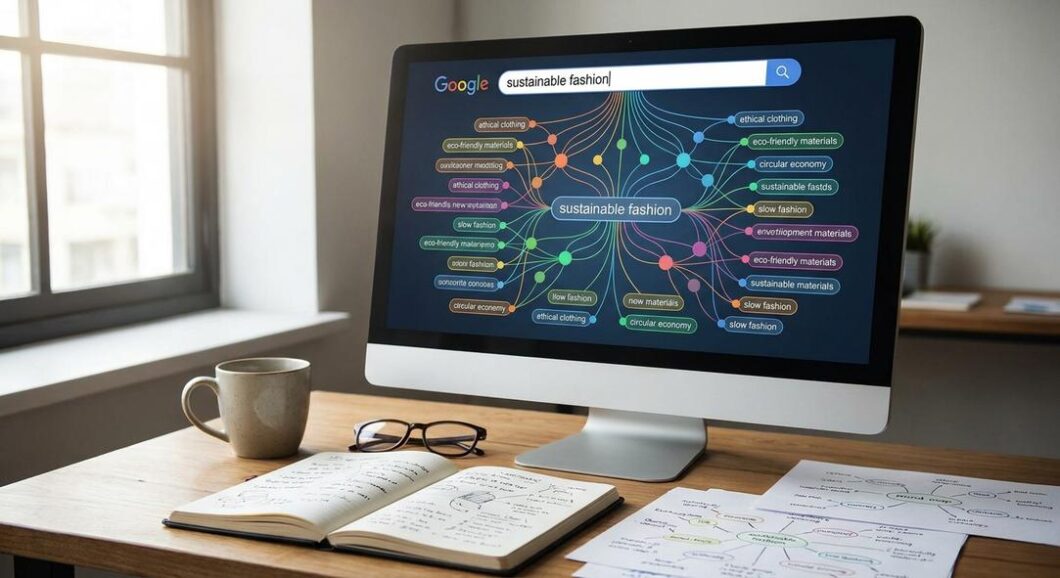
Google no longer reads the web like a clerk matching labels in a filing cabinet. It interprets, infers, connects, and occasionally makes the sort of semantic leap that reminds you search is now less about strings of words and more about meaning. This is where query expansion enters the story: the quiet machinery by which Google broadens or refines a user’s search to include related terms, concepts, entities, and intents.
For writers, editors, marketers, and site owners, understanding query expansion is not merely a technical curiosity. It is a practical way to create content that speaks the same conceptual language as Google and, more importantly, as readers themselves.
Query expansion is Google’s way of saying, “I know what you typed, but I also have a pretty good idea of what you meant.”
What Query Expansion Actually Means 🧠
At its simplest, Google query expansion is the process by which Google takes a user’s original search query and enriches it with additional meanings, synonyms, related phrases, and contextual associations. A search for “cheap flights to Paris” may involve concepts such as budget airlines, airfare deals, travel dates, airports near Paris, and even baggage fees. None of those words need to appear in the original query for Google to consider them relevant.
This does not mean Google ignores the words users type. Rather, it treats them as clues. A query is the beginning of an investigation, not the final evidence. Google uses enormous amounts of search behavior, language data, entity relationships, and machine learning to infer what information might satisfy the searcher.
Consider a person searching for “how to fix a slow laptop.” Google may expand that query to include ideas such as startup programs, malware, RAM upgrades, disk cleanup, overheating, operating system updates, and background processes. A page that thoroughly addresses those related issues may rank even if it does not repeat the exact phrase “how to fix a slow laptop” every few lines.
This is why modern visibility depends less on mechanical keyword placement and more on topical completeness. Google is looking for pages that understand the subject, not pages that merely chant the keyword like a monk with a spreadsheet.
Why Query Expansion Matters for Content Visibility 📈
Query expansion changes the rules of discoverability because people rarely search in perfect language. They search in fragments, half-formed questions, regional expressions, product nicknames, symptoms instead of causes, and problems rather than solutions. Google’s job is to bridge the gap between messy human language and useful information.
If your content only targets one exact keyword, you are fishing with a very narrow net. If your content covers the broader semantic field around that keyword, you give Google many more reasons to surface your page for related searches.
A well-structured article about “email marketing automation,” for example, should naturally address drip campaigns, segmentation, triggers, lead nurturing, abandoned cart emails, customer journeys, personalization, analytics, and deliverability. These are not random accessories; they are part of the topic’s ecosystem.
- More ranking opportunities: A semantically rich page can appear for many related long-tail searches.
- Better intent matching: Content that addresses adjacent questions is more likely to satisfy users.
- Stronger authority signals: Covering a topic in depth helps establish relevance and expertise.
- Improved engagement: Readers stay longer when a page anticipates their next question.
The page that wins is often not the page with the loudest keyword. It is the page that best understands the conversation around the keyword.
Start with Search Intent, Not Just Keywords 🎯
The first step in using query expansion intelligently is to stop treating keywords as isolated targets. A keyword is a doorway; search intent is the room behind it. Before writing, ask what the searcher is truly trying to do.
Someone searching “best CRM for small business” is probably comparing options. Someone searching “what is CRM” is learning. Someone searching “HubSpot vs Salesforce pricing” is closer to making a decision. These searches may all live within the same broad topic, but they represent different stages of understanding and intent.
Google’s query expansion systems pay attention to those distinctions. If the search intent is informational, Google may reward pages with definitions, examples, comparisons, and explanatory structure. If the intent is transactional, product specifications, reviews, pricing, and availability may matter more.
How to identify the intent behind a query 🧭
- Search the query yourself: Look at the current top results and note their format. Are they guides, product pages, videos, tools, or listicles?
- Study the SERP features: People Also Ask boxes, featured snippets, shopping panels, and local packs reveal what Google thinks users need.
- Look for modifiers: Words like “how,” “best,” “near me,” “review,” “price,” and “examples” signal different intentions.
- Map the user journey: Decide whether the searcher is learning, comparing, buying, troubleshooting, or validating a decision.
Once you understand intent, you can expand your content in ways that feel useful rather than padded. That distinction matters. Readers can smell filler from across the room.
Build a Semantic Keyword Map 🗺️
Keyword research used to revolve around volume and difficulty. Those metrics still have value, but they are not enough. To benefit from query expansion, you need a semantic keyword map: a cluster of related terms, questions, entities, and subtopics that define the full landscape of your subject.
Imagine you are creating a guide about “remote team management.” The obvious keyword is only the beginning. Google may associate the topic with asynchronous communication, project management software, employee engagement, time zones, onboarding, performance tracking, meeting fatigue, documentation, trust, and company culture.
Your job is not to stuff all these terms into the article like socks into an overpacked suitcase. Your job is to decide which related concepts genuinely help the reader and then organize them in a logical way.
Useful sources for semantic expansion 💡
- Google Autocomplete: Shows common query variations as users type.
- People Also Ask: Reveals questions Google connects to your topic.
- Related searches: Offers clues about adjacent needs and alternative phrasing.
- Competitor pages: Helps identify recurring subtopics in high-ranking content.
- Search Console data: Shows the actual queries your pages already appear for.
- Customer support logs: Often contain the raw, wonderfully unpolished language of real users.
- Forums and communities: Reddit, Quora, niche groups, and industry forums reveal how people discuss problems naturally.
The best semantic maps combine machine-visible patterns with human-visible pain points. Search tools can show what people type. Communities and customer conversations show what they mean.
Write for Entities, Not Just Phrases 🧩
One of the most important shifts in search is Google’s growing understanding of entities. An entity is a distinct thing: a person, place, brand, product, concept, event, or organization. Google does not merely see “Apple” as five letters. It tries to determine whether the search involves the technology company, the fruit, Apple Music, Apple stock, or perhaps a nearby orchard with ambitious branding.
Entity-based writing helps Google understand the context of your content. If you write about “jaguar speed,” the surrounding entities matter. Are you mentioning wildlife, predators, habitats, and big cats? Or engines, horsepower, models, and luxury vehicles? Query expansion depends heavily on this context.
To improve visibility, make the relationships between entities clear. If your article discusses “content visibility,” connect it to search engines, indexing, ranking, search intent, structured content, internal linking, and user engagement. These associations help Google place your page in the right conceptual neighborhood.
In modern search, context is not decoration. It is infrastructure.
How to strengthen entity signals 🔧
- Use precise names for people, tools, places, organizations, and concepts.
- Explain how key terms relate to one another.
- Include relevant examples, not generic abstractions.
- Avoid ambiguous phrasing when a specific term would help.
- Support claims with recognizable frameworks, standards, or industry language where appropriate.
This is not about writing for robots. It is about reducing ambiguity. Good writing has always done that; search engines have simply become sophisticated enough to notice.
Answer the Questions Around the Question ❓
Every search query contains a visible question and several invisible ones. A person searching “how to use query expansion for SEO” may also want to know what query expansion is, whether it still matters, how it differs from keyword clustering, what tools can help, and how to measure the results.
Content that anticipates these follow-up questions tends to perform better because it satisfies the broader intent. It also earns trust. A reader who finds the next answer before having to return to Google is more likely to stay, click, subscribe, or remember your brand fondly, which is not nothing in an internet built on distraction.
One practical technique is to build an article outline from question clusters. Start with the main query, then gather related questions from People Also Ask, customer interviews, sales calls, community threads, and internal site search. Sort them by intent and importance. The strongest questions become headings; the smaller ones become supporting paragraphs.
Questions worth including in content planning 📝
- What does the reader need to understand first?
- What misconception might prevent them from acting?
- What comparison are they likely to make?
- What risks, costs, or limitations do they care about?
- What should they do after reading?
This approach turns content from a keyword container into a guided conversation. And guided conversations, unlike keyword containers, are useful.
Create Topic Clusters That Support Query Expansion 🌐
A single article can only do so much. For competitive topics, content visibility often depends on how well your site covers a subject across multiple connected pages. This is where topic clusters become valuable.
A topic cluster typically includes one broad pillar page and several more specific supporting pages. The pillar page offers a comprehensive overview. The supporting pages explore subtopics in greater depth. Internal links connect the pieces so readers and search engines can understand the relationship between them.
For example, a site focused on digital marketing might create a pillar page on “SEO strategy” and supporting pages on technical SEO, content optimization, keyword research, internal linking, local SEO, ecommerce SEO, and analytics. Together, these pages create a stronger topical footprint than one lonely article trying to do everything at once.
A simple topic cluster model 🧱
- Choose a broad topic: Select an area central to your expertise and audience needs.
- Create a pillar page: Cover the subject comprehensively but not exhaustively.
- Identify subtopics: Use query expansion research to find related questions and narrower intents.
- Publish supporting pages: Give each subtopic a focused, high-quality treatment.
- Link strategically: Connect pages using clear, descriptive anchor text.
- Update regularly: Refresh pages as search behavior, terminology, and industry practices evolve.
This structure helps Google see not just that you have written about a topic, but that your site has a meaningful body of work around it. In publishing, as in dinner parties, depth is more impressive than shouting.
Use Natural Language, Not Keyword Gymnastics ✍️
One of the happy consequences of query expansion is that it rewards more natural writing. Since Google can associate related phrases and concepts, you do not need to repeat the same exact term with grim determination. In fact, excessive repetition can make your writing worse and your page less persuasive.
Instead, use the vocabulary a knowledgeable person would naturally use when explaining the topic. For “mortgage refinancing,” that might include interest rates, loan terms, closing costs, equity, credit scores, fixed-rate loans, adjustable-rate mortgages, monthly payments, and break-even points. These terms are not SEO ornaments; they are the actual language of the subject.
The trick is to write broadly enough for Google to understand the semantic field, but clearly enough for readers to feel guided rather than buried. The goal is not to sound encyclopedic. It is to be helpful with a pulse.
Good SEO writing does not announce that it is optimized. It simply feels unusually useful.
Practical writing habits that help ✅
- Use synonyms where they sound natural, not decorative.
- Define important terms before using them heavily.
- Include examples that show the concept in context.
- Group related ideas under clear headings.
- Avoid thin sections that exist only to target a keyword variation.
- Read the draft aloud to catch awkward repetition.
If a sentence sounds as though it was written to please an algorithm rather than a person, rewrite it. Algorithms change. People remain stubbornly fond of clarity.
Refresh Existing Content with Expansion in Mind 🔄
You do not always need to create new content to benefit from query expansion. Often, the fastest gains come from improving pages that already have impressions, backlinks, or modest rankings. These pages have a foothold; they simply need better coverage.
Google Search Console is especially useful here. Look for pages that receive impressions for queries you did not intentionally target. These accidental appearances are clues. Google already sees some relationship between your page and those searches. Your task is to decide whether the page should address those ideas more explicitly.
Suppose a page about “content calendars” is appearing for queries such as “editorial workflow,” “social media posting schedule,” and “content planning template.” That suggests opportunities to expand the page with sections on workflow management, channel planning, downloadable templates, or team collaboration.
A refresh checklist for better visibility 🛠️
- Review Search Console queries for the page.
- Identify related terms with high impressions but low clicks.
- Compare your content with current top-ranking pages.
- Add missing subtopics that genuinely serve the reader.
- Improve headings to reflect real questions and intent.
- Strengthen internal links to and from related pages.
- Update examples, statistics, screenshots, and recommendations.
- Rewrite the title and meta description if they no longer match the expanded content.
Refreshing content is less glamorous than launching something new, but the web is full of neglected pages quietly waiting to become useful again. Think of it as editorial gardening, minus the sunburn.
Measure What Query Expansion Is Doing 📊
Because query expansion is partly invisible, measuring its impact requires looking beyond a single keyword ranking. The question is not only whether your page ranks higher for one term. It is whether the page begins to appear for a richer set of relevant queries.
In Search Console, monitor changes in total impressions, click-through rate, average position, and the number of queries generating visibility. A successful expansion effort often produces growth across long-tail searches before it moves the needle on the most competitive head term.
Analytics tools can also reveal whether the expanded content is actually helping readers. Look at engagement, scroll depth, conversions, assisted conversions, and internal link clicks. Visibility without usefulness is just traffic passing through a revolving door.
Metrics worth watching 👀
- Query diversity: Are more relevant searches triggering impressions?
- Long-tail traffic: Are specific, intent-rich queries increasing?
- Average position: Are rankings improving across related terms?
- Click-through rate: Do titles and descriptions match expanded intent?
- Engagement: Are visitors reading, clicking, and continuing their journey?
- Conversions: Is the content attracting the right audience, not just a larger one?
The point is to measure relevance, not vanity. A thousand extra visits from the wrong audience are less valuable than a hundred readers who find exactly what they need.
Common Mistakes to Avoid ⚠️
Query expansion is powerful, but it can be misunderstood. The most common mistake is treating it as permission to add every related phrase imaginable. That produces bloated content: technically comprehensive, spiritually exhausting.
Another mistake is confusing semantic richness with vagueness. A page can mention many related concepts and still fail to answer the main question. Good expansion deepens the topic; bad expansion wanders away from it wearing a hat that says “SEO strategy.”
- Expanding too broadly: Stay close to the user’s intent and the page’s purpose.
- Ignoring structure: Even excellent information fails when it is poorly organized.
- Copying competitors: Use competitor analysis for insight, not imitation.
- Forgetting expertise: Add perspective, examples, and judgment that generic pages lack.
- Over-optimizing anchor text: Internal links should be clear and natural.
- Neglecting updates: Language and search behavior change; content should evolve with them.
Expansion should make a page more useful, not merely longer.
The discipline lies in knowing what to include, what to summarize, and what deserves its own separate page. Editorial restraint is still a ranking asset, even if no tool labels it that way.
A Practical Workflow for Using Query Expansion 🚀
For teams that want a repeatable process, query expansion can be folded into content planning without turning every article into a doctoral thesis. The key is to make semantic research part of the editorial routine.
- Choose the primary query: Define the main topic and the audience you want to reach.
- Identify the intent: Determine whether the user wants information, comparison, navigation, purchase, or troubleshooting.
- Gather related queries: Use Google results, Search Console, keyword tools, communities, and customer data.
- Group by theme: Cluster terms and questions into logical subtopics.
- Prioritize by usefulness: Include what helps the reader complete their task.
- Create the outline: Build headings around the main intent and important follow-up questions.
- Write naturally: Use related terms because they belong, not because a tool demanded tribute.
- Add internal links: Connect the page to relevant cluster content.
- Publish and monitor: Track impressions, query growth, engagement, and conversions.
- Refresh over time: Expand or refine based on real performance data.
This workflow keeps the writer in charge. Tools can suggest directions, but editorial judgment decides the route. That is how content becomes both visible and worth seeing.
Making Content Visible by Making It Understandable 🌟
Google query expansion is not a loophole, trick, or secret handshake with the algorithm. It is a reflection of how search has matured. People ask imperfect questions; Google tries to interpret them; the best content meets both halfway with clarity, depth, and relevance.
To use query expansion well, think less like a keyword tactician and more like a subject-matter guide. Understand the intent behind the search. Cover the related concepts that matter. Build topic clusters. Strengthen entity signals. Refresh what already exists. Measure the growth of relevance, not just the movement of a single ranking.
The reward is content that can surface across the many ways people express the same need. And that, in the crowded marketplace of the web, is the real victory: not merely being indexed, but being understood.